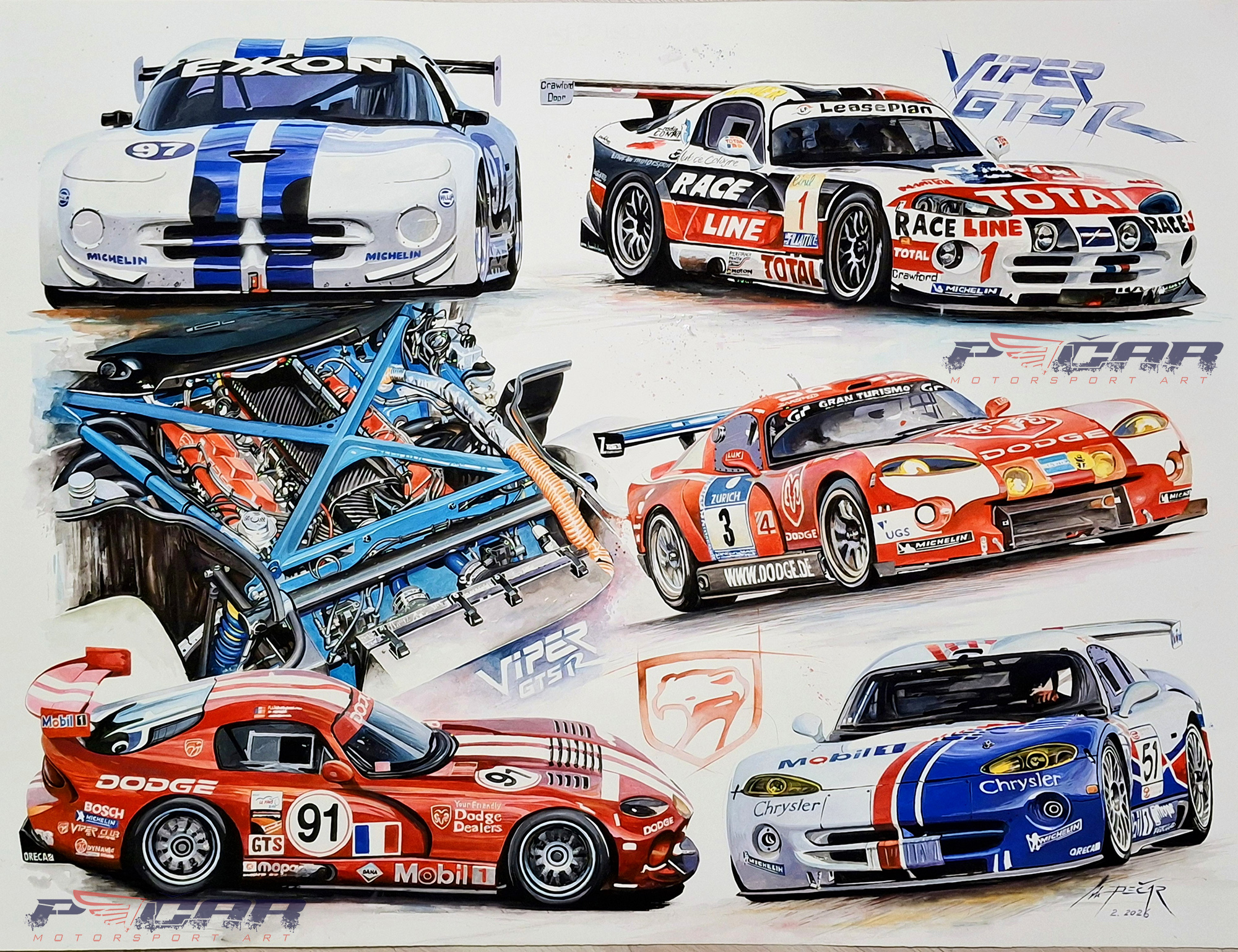
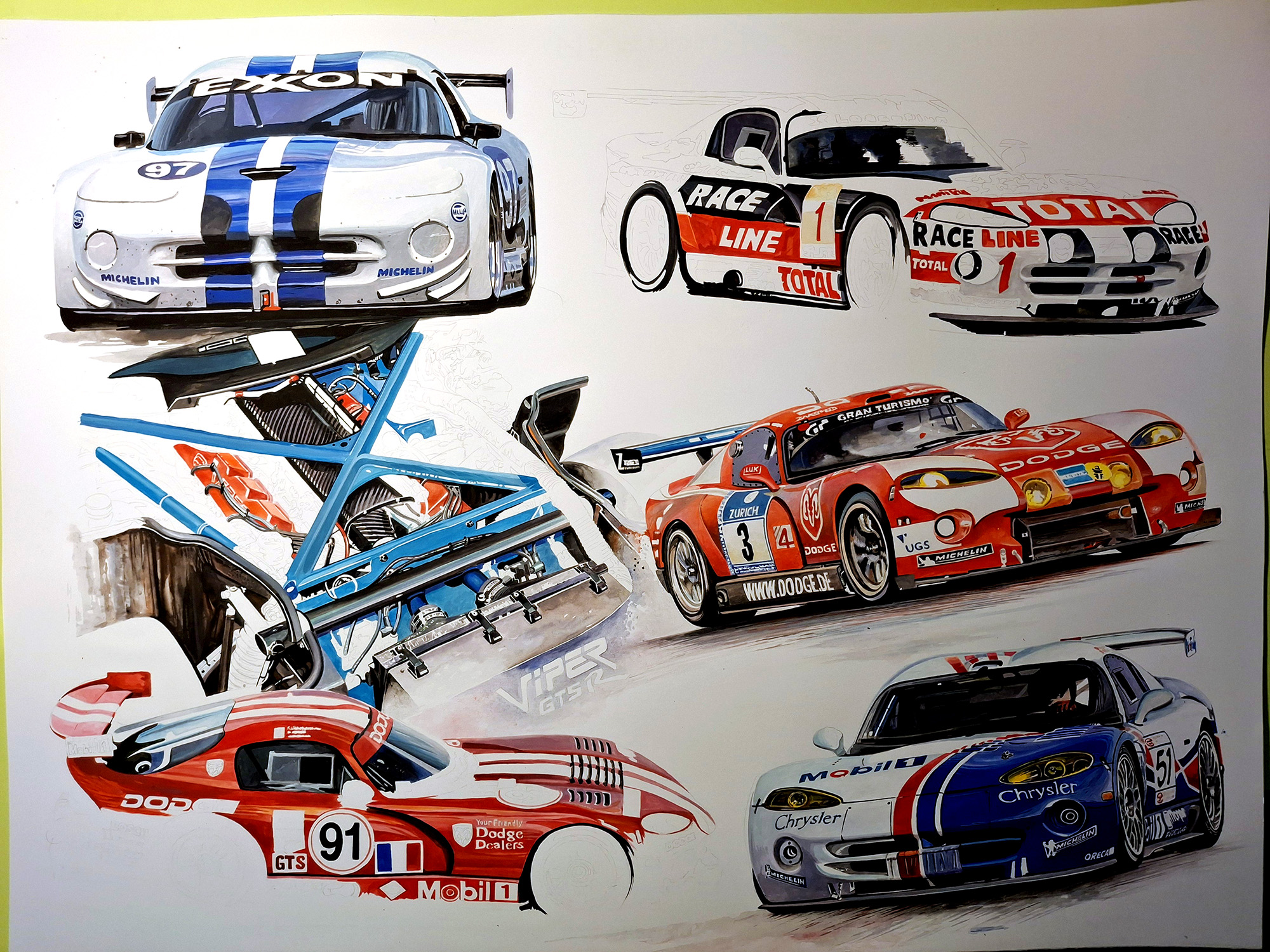
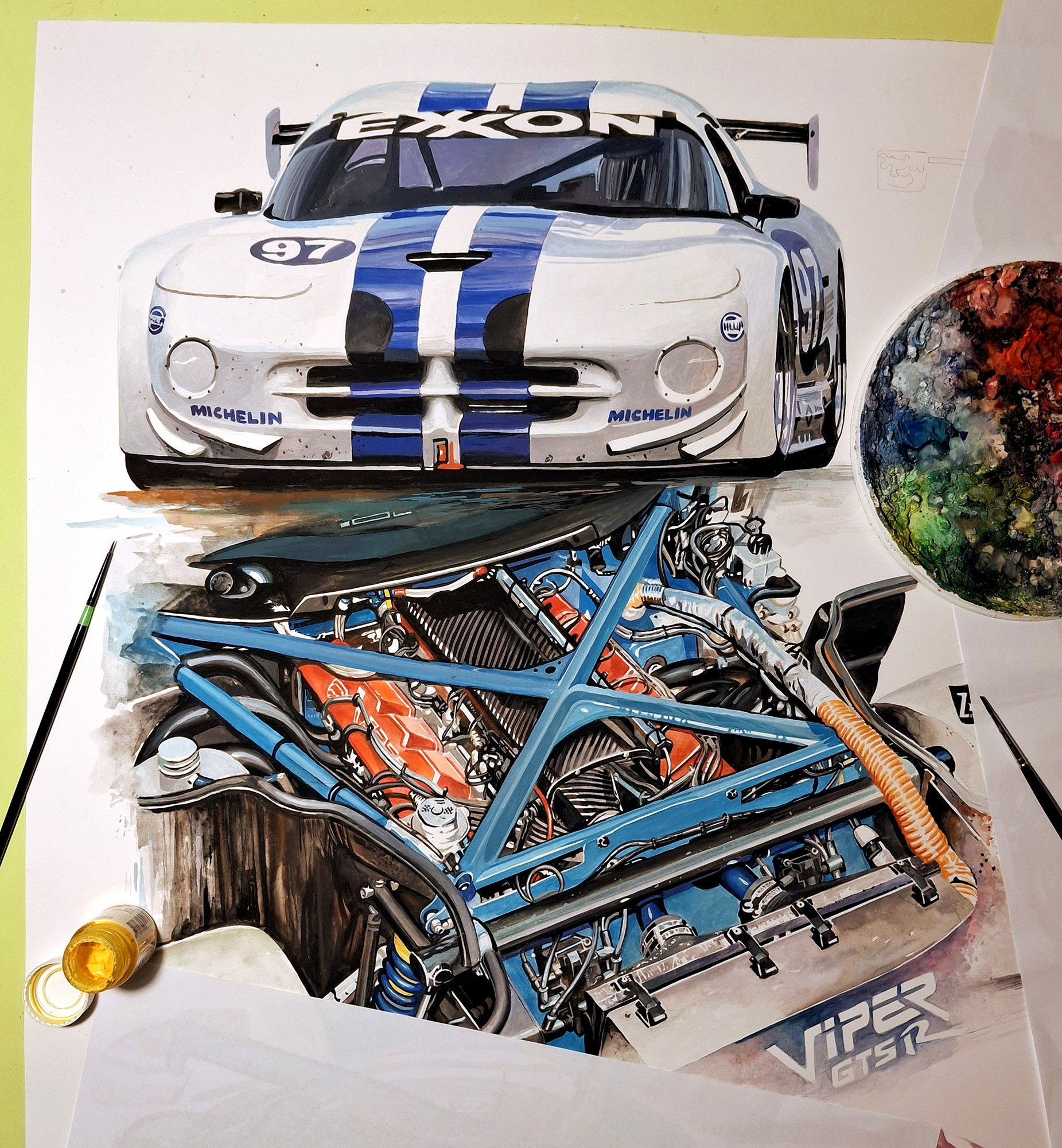
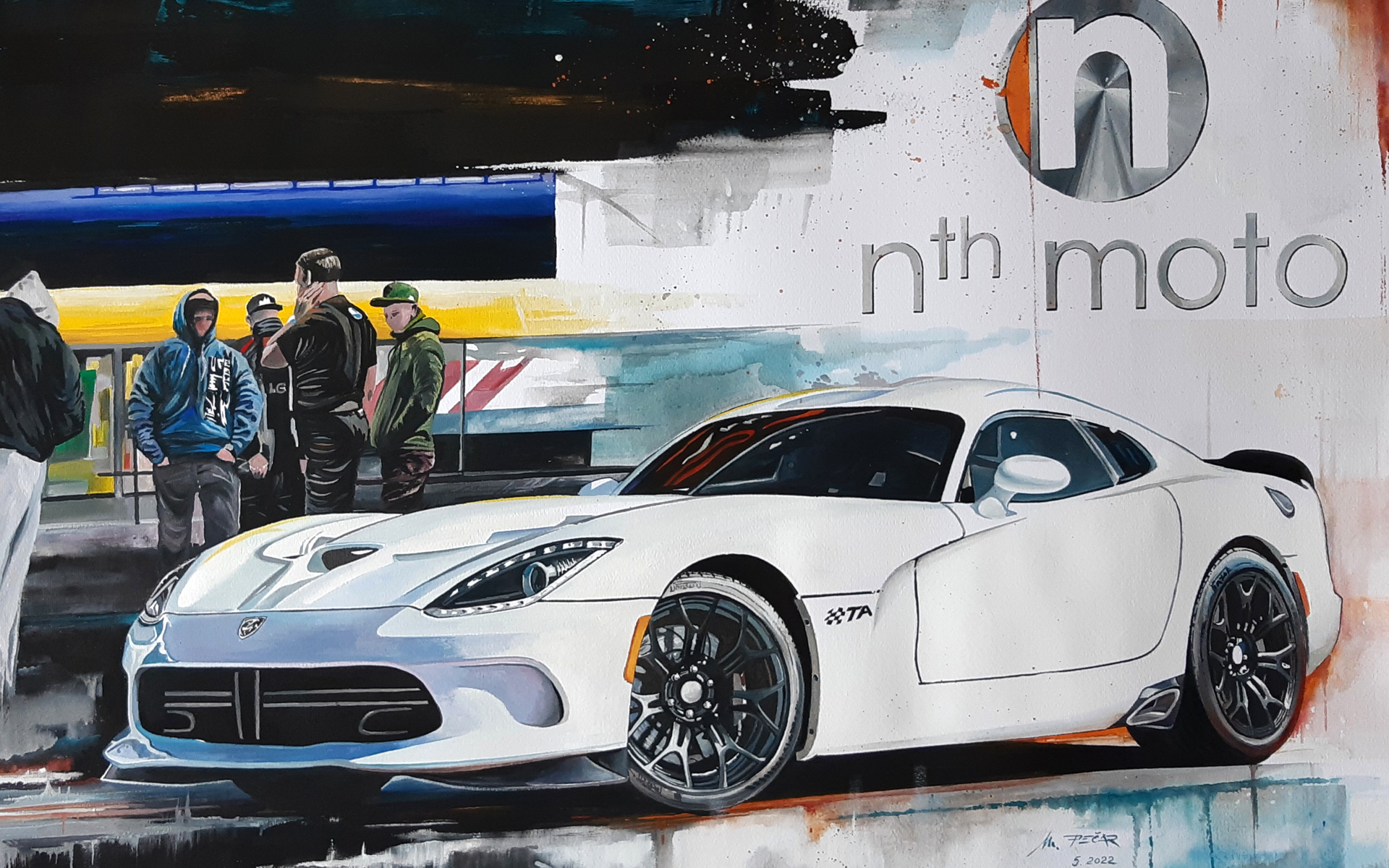
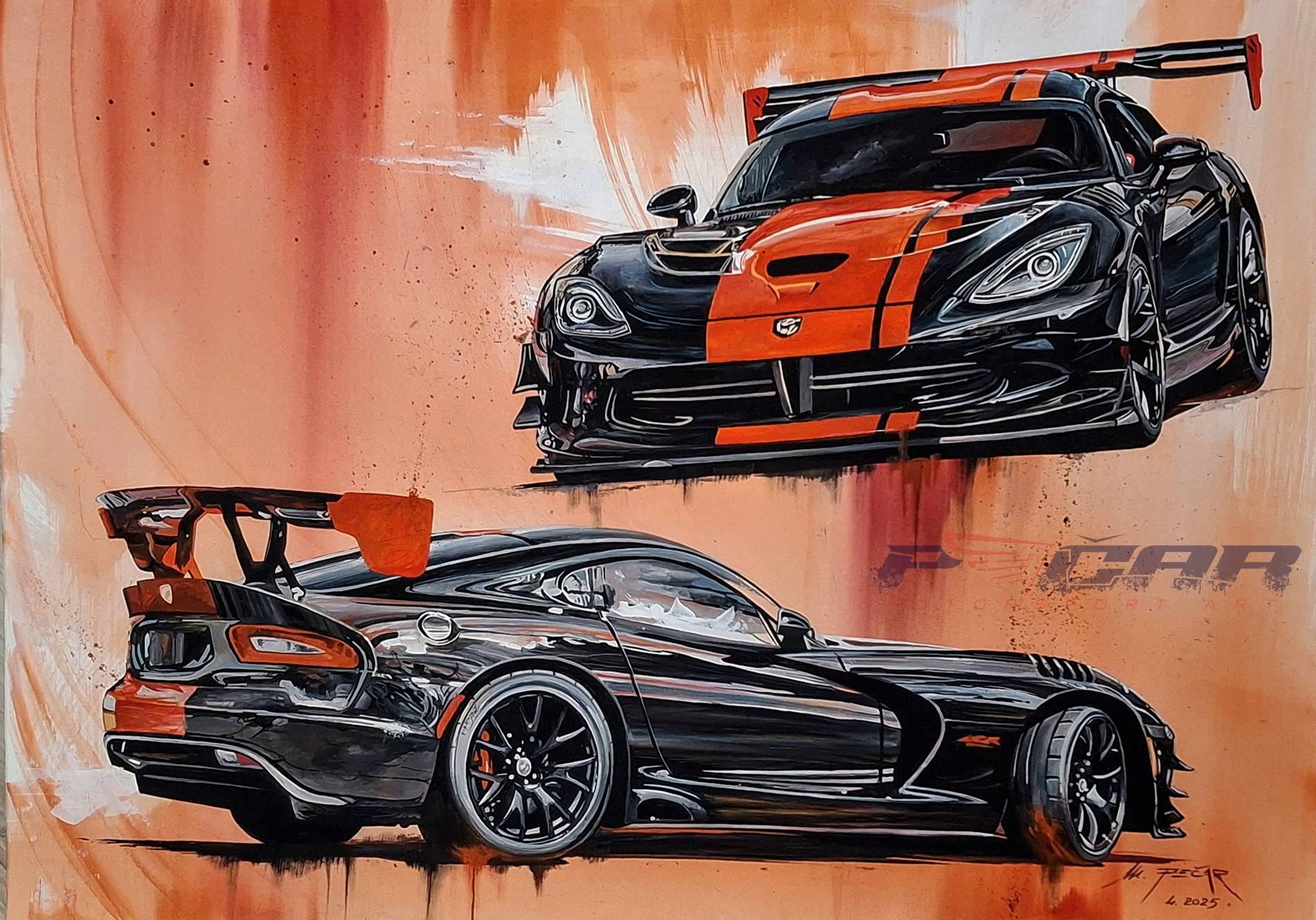
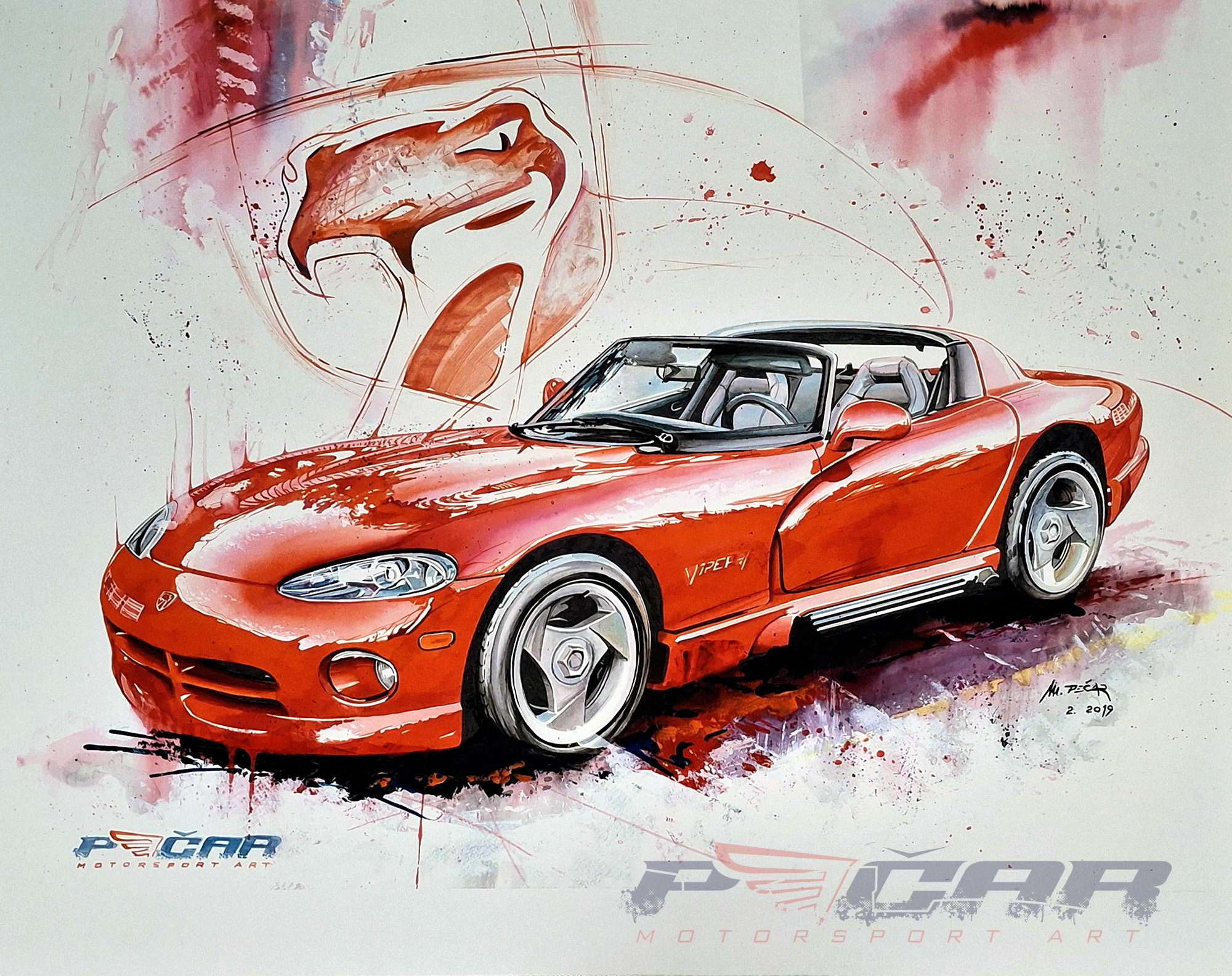
The image shows the evolution of the GTS-R through the eyes of an expert. The prints are high-quality reproductions, limited edition of only 100 pieces. Each is numbered and certified. Museum quality. Printed on 300g paper.
From the first car to the last, his latest work offers glimpses into the technical evolution of the GTS-R.
The original GTS-R P1, the mule that performed much of the engineering development work in 1995-1997 which set the foundation for future success. Depicted here at the debut race at Daytona in 1996 with Canaska/Southwind and J&P Motorsports (top left).
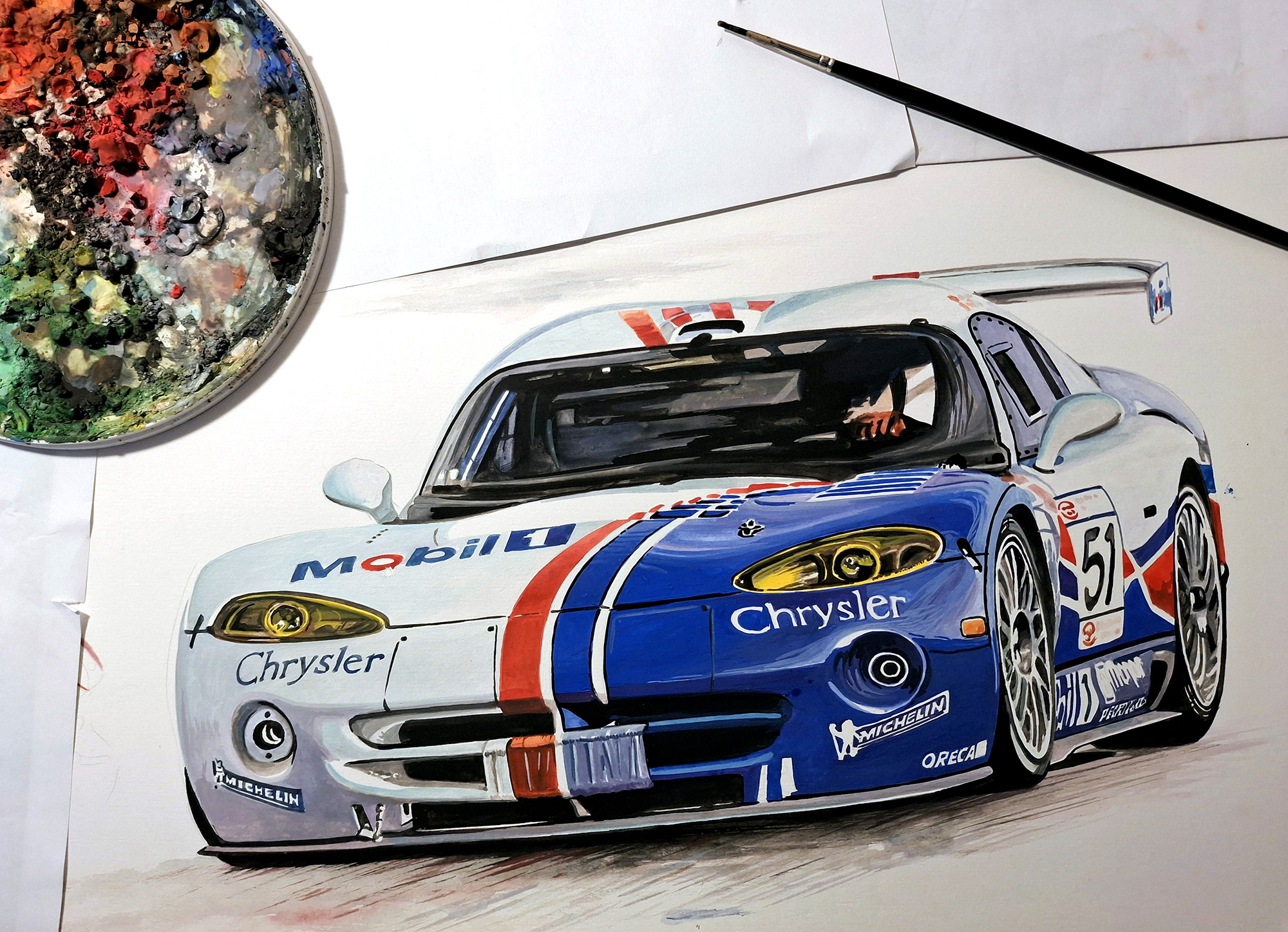
Perhaps the technical high water mark during the Chrysler works era, C9 in route to an FIA GT World Championship in 1998 with Viper Team ORECA benefitting from unique 19 inch wheels/tires, ABS (at Le Mans) and the largest aero package fitted by the factory (bottom right).
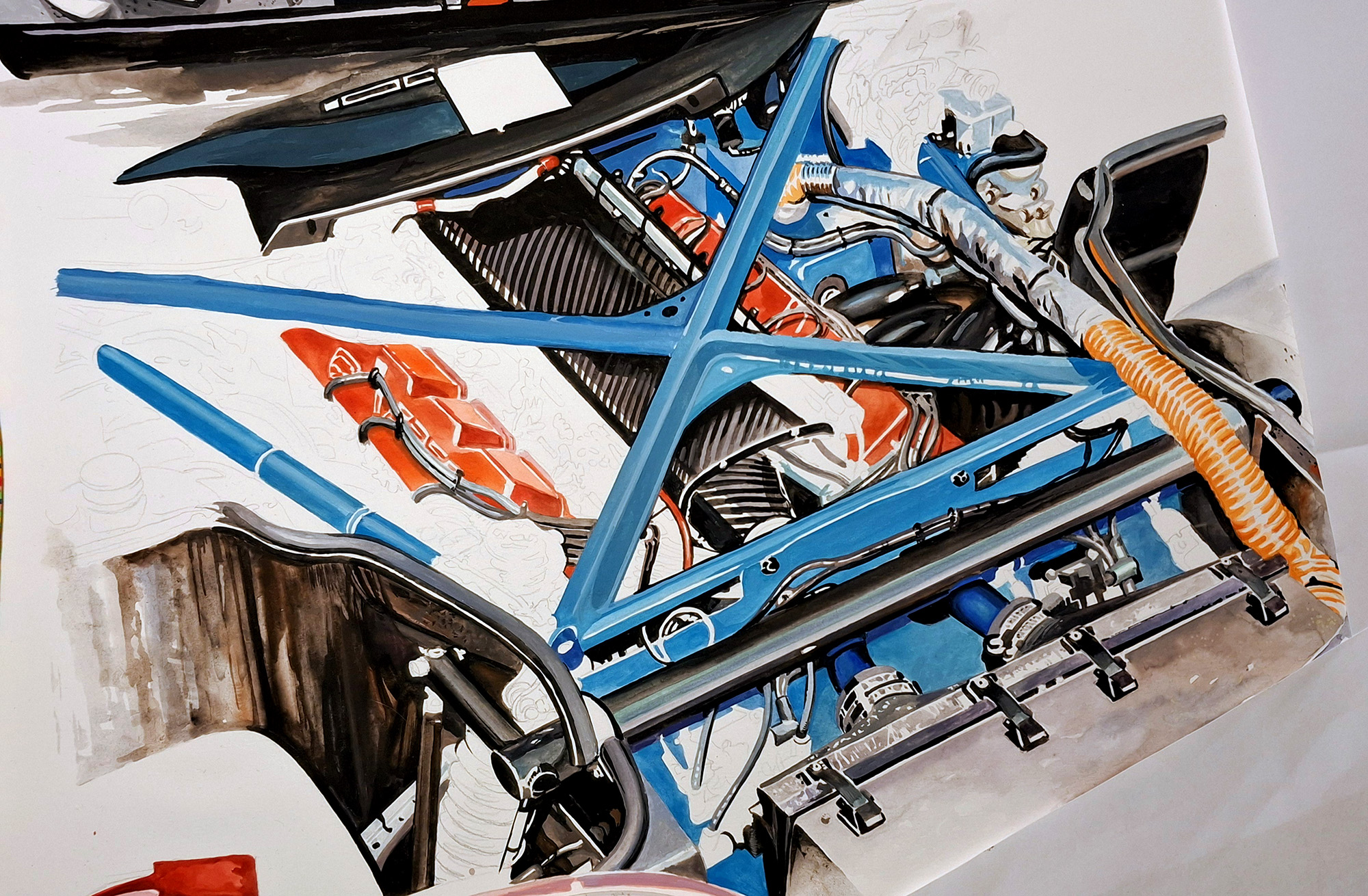
The engine configuration which powered many of GTS-R’s greatest victories, Caldwell Development’s 8.0L V10 shown here in C22 on the way to GTS victory at Le Mans in 1999 with Viper Team ORECA (middle left).
Regulations stripped away some of the tech, but the refined package proved to be an endurance juggernaut at the conclusion of the factory program in 2000. C31 races towards an ALMS title at Sebring with Viper Team ORECA (bottom left).
Customer teams carry the flag as regulations swing back away from production cars. Larbre Competition’s C42 sporting bigger wings, wider tracks and a sequential gearbox with overall victory at the 2002 Spa 24 Hours (top right).
End of the line, C52, the final GTS-R produced. A unique roar from the Exotic Engine Development 6.2L V8/10 scores a class victory at the 2007 Nürburgring 24 Hours with Zakspeed. A revised chassis (2003+) provided the basis for an endless number of technical configurations campaigned by customer teams as GTS-R blasted into the sunset (middle right).